
When custom shirts or team uniforms are made, the way designs are added (called “printing”) can change how they look, feel, and last. Picking the wrong method might lead to faded logos, stiff fabric, or high costs. For example, a small business might need cheap options, while a sports team might want something tough enough to survive wash after wash.
At eColor Media , we help brands choose the best method for their needs. If you’re curious about options, learn more here !
If a method is not suited for the fabric or design, the print might crack, fade, or peel after just a few washes. For example, screen printing on polyester without special inks can cause stiffness, while heat transfer on cotton might not stick well.

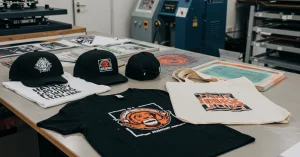
Screen printing is a classic method where ink is pushed through a stencil onto fabric. It’s great for bright colors and big orders because the cost per shirt goes down when more are printed. However, setting up screens costs extra, so it’s not always best for small batches.
The process involves creating a mesh screen for each color in the design. Ink is then pressed through the screen onto the shirt. This creates bold, long-lasting prints.
Best for:
If you’re making 50+ shirts with simple designs, screen printing could be right for you.
Heat transfer uses heat and pressure to stick a design onto fabric. Two types are:
This method works well for small orders or photos , but the design might crack over time.
Best for:
DTG printing is like using a regular printer, but for shirts! Ink is sprayed directly onto cotton. It’s perfect for small batches or complex art (like photos), but it’s not ideal for dark shirts unless white ink is used.
Best for:
Embroidery uses thread to stitch logos onto fabric. It looks fancy and lasts a long time, but it’s expensive for big, detailed designs. It’s often used for business uniforms or hats .
Best for:
Sublimation turns ink into gas using heat, which soaks into polyester fabric. This creates all-over prints (like on sports jerseys) that don’t fade. However, it only works on light-colored polyester.
Best for:
DTF printing uses a film to transfer detailed designs onto any fabric. It’s cheaper than screen printing for small orders and handles colors better than DTG.
Best for:
Yes, but only for large orders. Screen printing has high setup fees, but the price per shirt drops fast. Heat transfer costs less upfront but is pricier for 50+ shirts.
Heat transfer wins here. It can print photos and gradients easily, while screen printing struggles with fine details unless many screens are used.
Mostly. Screen-printed designs are tough and won’t crack, but heat transfer (especially vinyl) can peel after months.
Screen printing has setup fees for each color, while heat transfer has no setup fees but higher per-shirt costs.
Heat transfer or DTG printing is best for small businesses needing just a few shirts. No setup fees mean lower costs upfront.
Screen printing is cheapest for big batches. Need 100+ shirts? This is your pick!
DTG or heat transfer (DTF) works best for photos or art with many colors.
Cotton shirts work best with screen printing or DTG. Polyester shirts need sublimation or DTF for vibrant colors.
Also Read: How to Use Promotional Products to Build Brand Loyalty in 2025?
Yes! Cotton works best for screen printing and DTG, while polyester suits sublimation. For uniforms, sublimation is often used because it’s lightweight and breathable.
Sublimation or DTF printing are best for athletic gear. They don’t add weight or stiffness.
Screen printing is cheapest for bulk orders. For polyester uniforms, sublimation offers vibrant, long-lasting results.
School uniforms often use screen printing for logos and names. For all-over designs, sublimation is ideal.
Yes. Screen printing and sublimation have setup fees, while heat transfer and DTG do not.
Absolutely! The more shirts you order, the cheaper each one becomes—especially with screen printing.
Sometimes, but not always. Water-based inks (used in screen printing) are eco-friendly and affordable.

Water-based inks are safe for the planet and feel soft on fabric. They’re used in screen printing and DTG.
Yes! DTG and DTF printing use only the ink needed, reducing waste.
Print-on-demand avoids leftover inventory, but bulk production lowers costs. For green goals, print only what you need.
Think about:
Screen printing lasts the longest.
Yes! Use DTG or heat transfer (DTF) for photos.
DTG (with white ink) or heat transfer.
Use screen printing for 50+ shirts with simple colors.
Use heat transfer for small orders or detailed art.
Yes, but it’s expensive for big logos.
Soft, non-toxic inks (water-based) are safest for kids’ clothing.